Upholstery Fabrics Explained: Why the Fabric Decides How It’s Cleaned
Two sofas can look alike and need very different care, because what a fabric is made of matters more than how it looks.
October 27, 2026 · 3 min read
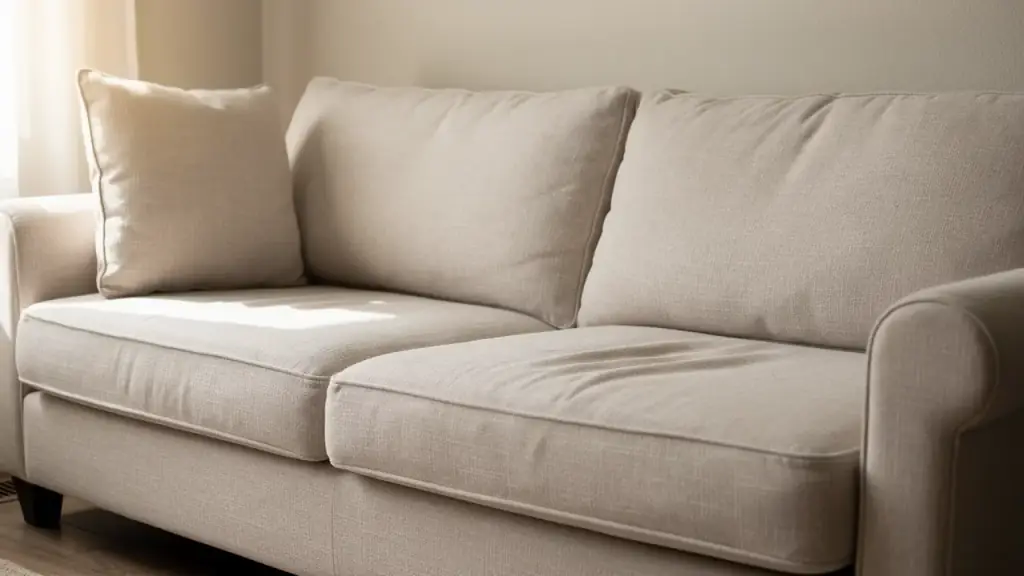
A sofa is not a carpet, and it is not a shirt. It sits somewhere in between, with padding underneath, a frame that can’t be soaked, and a fabric on top that could be nearly anything. Before anyone cleans it, the first job is to figure out what that fabric is. Get that wrong and you can end up with shrinkage, color bleeding, water rings or a stiff, crunchy feel.
Why fabric type changes the method
Fibers behave differently when they get wet. Some shrug off water. Some swell. Some release dye. Some felt up under heat and agitation. That is fiber chemistry, not cleaning-company opinion. A method that is gentle on one fabric can ruin another, so a careful technician tests before committing, and prices by fabric type for the same reason.
Start with the cleaning code tag, usually found under a seat cushion or on the frame. W means water-based cleaning is fine. S means use a solvent only. WS means either works. X means vacuum only, with no liquid. Not every sofa has a tag, and not every tag is reliable, so testing still matters.
Olefin and nylon: the forgiving ones
Olefin and nylon are synthetic fibers that handle cleaning well. Nylon is tough and takes water-based cleaning in stride. Olefin resists water-based stains by nature, and it tends to dry quickly. Many everyday family sofas and chairs use one of the two, and TJ’s groups them together as the lowest line on its upholstery price guide.
Other synthetics, cotton, wool and prints
Most other synthetics, such as polyester blends, clean well too, though each blend has its own limits. Cotton is natural and absorbent. It can shrink, and it can show water rings if it dries unevenly. Wool is durable but sensitive to heat, harsh alkaline cleaners and too much agitation, which can felt the fibers. Printed fabrics add one more variable, because a dye that looks stable can run where the colors meet.
None of these is a reason to skip cleaning. They are reasons to use the right amount of moisture, the right products and the right tools for the fabric in front of you.
A quick test on a hidden spot, such as the back of a skirt or under a cushion, shows whether a dye will move before the visible surface is ever touched. It takes a minute, and it is the cheapest insurance a sofa can get.
Unrefined cottons and exotic fabrics
This is the careful category. Unrefined cottons haven’t been finished the way mass-market upholstery fabric has, so they absorb fast and can shrink or stain with very little water. Exotic fabrics, silk for example, can water-stain, lose their texture or release dye. They call for slower work, gentler tools and often less moisture. The chance of a mistake is higher, which is why this tier costs more.
TJ’s upholstery price guide
These are the three upholstery lines from TJ’s general pricing guidelines, word for word:
- Upholstery: $24.00 per linear foot, which includes olefin and nylon
- Most synthetics, cotton, wool, and prints are $25.00 per linear foot
- Unrefined cottons and other exotic fabrics are $30.00 per square foot
Notice that the last line is quoted by the square foot while the first two are by the linear foot. These are guidelines, so call with your piece and fabric in mind and ask how your sofa would be measured.
What to do before you book
- Check for a cleaning code tag under a cushion and write down the letter.
- Note the fiber content if the tag or your original paperwork lists it.
- List every stain and what caused it, if you know. Coffee, wine, grease and ink all behave differently.
- Mention pets, kids and anyone in the house with allergies, so the technician knows how the piece gets used.
TJ’s says its cleaning products are safe for kids, pets, plants and allergy-sensitive people. It also points out that a heavily used sofa collects dust, stains and trapped odors that a vacuum alone can’t pull out.
Set honest expectations
Cleaning improves a sofa, but it can’t undo wear. Shiny arms, sagging cushions and fading in the sunniest corner are changes in the fabric itself, not dirt. Old stains from dye, ink or bleach are often permanent. Ask what the technician expects before the work starts, not after.
To book upholstery cleaning, call TJ’s at 303-400-6961 or use the contact page. Describe the fabric, the stains and the size of the piece, and you will get a clear answer on how it will be handled.
TJ’S CARPET & UPHOLSTERY CLEANING, 303-400-6961
Call 303-400-6961More articles
What Actually Comes Out of Your Carpet: Hot Water Extraction vs. Topical Freshening
A freshened carpet and a deep cleaned carpet can look alike for an afternoon, but only one of them has lost its soil.
Pet Urine in Carpet and Pad: Why the Odor Keeps Coming Back
If a spot smells fine for a week and then returns, the problem is almost never the carpet you can see.